
On Writing
And what it takes to be a writer today

Hello, and happy Sunday!

Last year, I read more books than I ever did in one year. I hadn’t set out to break any personal record; I got into a certain rhythm, and it just happened.
When I reached the 52nd book threshold, I was so proud of myself. That had been my secret mental goal all along. It makes sense: one book per week is not too much when you put it in perspective. But for someone with undiagnosed ADHD (I say this lightly and with the firm belief that anyone who spends more than 4h on their phone all day is ADHD), that’s a tremendous achievement. Throughout my life, I couldn’t maintain consistency, even in the areas I am good at or love doing. Some rebellious part of my brain would kick in, sabotaging long-term effort with a momentary lapse. This Hyde side of my personality emerges just when I am starting to see progress through consistency. It lulls me into complacency before I can prove what I set out to prove.
The idea of 52 books per year stuck with me while I was reading On Writing by Stephen King. I first read the book in the early 2000s, and I found it such an incredibly generous gift to his readers and other (wannabe) writers. Stephen King famously reads 70 to 80 books a year, well over one a week. In On Writing, he frames this not as a flex but as a baseline: reading widely and constantly is how a writer learns what works, what doesn’t, and what’s already been done. He even published a full list of all the books he read during that year. Some people mistakenly think that he meant for the list to be the ultimate reading list for anyone who wants to be as good a writer as he is. He prefaced the list with this comment, though:
These are the best books I’ve read over the last three or four years, the period during which I wrote The Girl Who Loved Tom Gordon, Hearts in Atlantis, On Writing, and the as-yet-unpublished From a Buick Eight. In some way or other, I suspect each book in the list had an influence on the books I wrote.
As you scan this list, please remember that I’m not Oprah and this isn’t my book club. These are the ones that worked for me, that’s all. But you could do worse, and a good many of these might show you some new ways of doing your work. Even if they don’t, they’re apt to entertain you. They certainly entertained me.
The way I took Steve’s list was that he is illustrating the wide range of reading he does to stay in touch with authentic writing. I understood that unless you read at least one book per week for a year (or a long while), it will be a lot harder to write anything that appeals to readers. After sticking to this reading pace for a few months, I noticed a change in how my brain operates, in how I express myself and how much easier it was for me to tackle a blank page. If there’s anything I miss this year, it’s that streak and the clarity of thought that comes from it.
I love to see Donna Tartt on Stephen King’s list, because the admiration runs both ways. Stephen King praised Donna Tartt’s The Goldfinch as a rare, "smartly written literary novel that connects with the heart as well as the mind". In her turn, in her famous 2014 Charlie Rose interview, Donna Tartt lit up when talking about King, calling him a serious craftsman whose advice she'd carried with her for years. The line she keeps coming back to in interviews is something King once said: "Don't give readers what they want, give them what you want.” By which, she clarifies, he meant readers are happiest when they're handed not the book they expected, but the book they didn't yet know they were looking for. That permission slip, she said, was what got her through the writing of The Secret History, which she was repeatedly told to shorten, modernise, and rewrite with a female narrator.
Similarly, Stephen King was pressured to shorten The Stand back in the 1970s because the glue used for binding books wouldn’t hold a tome of more than 1,000 pages. He never got over that, and in the 1990s, he followed his initial instinct and republished it in its entirety. Donna Tartt followed King’s advice and her instinct about The Secret History, and it made for a glorious literary achievement. I find it so endearing that these two writers are reading and admiring each other this way.

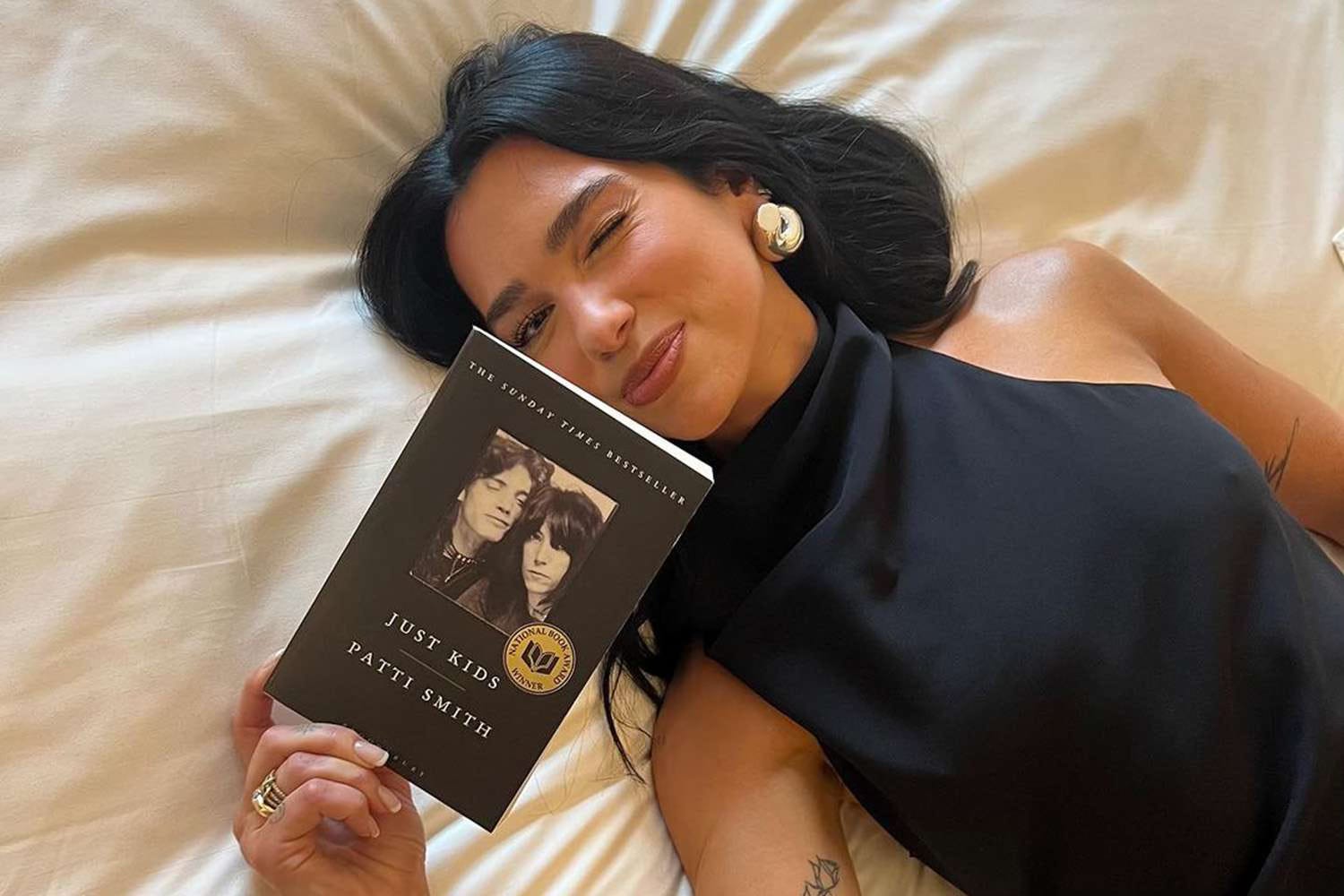
I read a piece this week by Elle magazine called “Can Dua Lipa Save Books?” in the context of Dua Lipa’s appointment as curator of this year’s London Literature Festival. She has been running a book club for a while now and posts interviews with the authors on her Instagram, and I love her for it.
In the same article, there is a mention of an author cheerfully describing how she’d gone from publishing ten or twelve books a year to over two hundred by using AI, and raking in thousands of dollars for it. If I can generate a book in a day, she said, and you need six months, who’s going to win the race?
“How does Dua Lipa’s appointment to the London Literature Festival tie into this? She is one of the most recognisable faces in the world, and has consistently chosen to platform older female writers whose work is inimitable by an LLM. Helen Garner has controversially followed the tradition of new journalism, bringing her own subjectivity and life experience to the reporting of crime. Roxane Gay’s reflections on the tension between blow jobs and feminism are informed by her experience as a Black woman in a larger body. Margaret Atwood could not have written The Handmaid’s Tale at 45 had she not lived four decades in the female body that is the dystopian novel’s central subject. Whether these authors and their prose are beyond the technical reach of rapidly evolving large language models is up for discussion — but the authors’ subjectivity and humanness will always be, which is why so many readers are repulsed by the idea of being conned into engaging with literature created by AI.”
“Can Dua Lipa Save Books?”
ELLE Australia
I keep coming back to two sentences from the Elle piece. The first is that books are “a technology of selfhood.” The second is that a large language model has no interior world to share. And I think this is what Stephen King and Donna Tartt both know: the reason you read 70 or 80 books a year, the reason you spend a decade on one (which Tartt is known to do), is that the whole point is to spend years assembling a self on the page, and then to offer it up, knowing full well it might not land.
A model trained on everyone has been no one. It has never been bored, never been heartbroken, never sat in a bookshop wondering whether the person at the till was judging its choices. There is no there there.1 And readers can tell, even when they can’t articulate why.
I’m not here to tell you that reading will save publishing, or that Dua Lipa will, or that any single novelist or curator or book club can hold the line against what’s coming. Reading and publishing are two distinct things in my head, particularly since I discovered fan fiction and I realised that people will read what they want regardless of what is being published.
What I do know is that the act of choosing a book, sitting with it for the time it takes, taking it in and letting it work on you and give you something back, that’s a small, defiant, deeply human thing. It’s the opposite of content generation. It’s recognition.

https://en.wikipedia.org/wiki/There_is_no_there_there